
TABLE OF CONTENT
Security Operations Centers (SOCs) are meticulously designed to detect and respond to active threats across the network. Data governance teams, meanwhile, focus heavily on understanding and protecting sensitive information through rigorous discovery, classification, labeling, and policy enforcement.
In many organizations, these two critical efforts operate in complete silos. SOC teams monitor systems, firewalls, and endless streams of alerts without always knowing which specific databases or file shares hold the most critical information. Conversely, governance teams may perfectly classify data on a spreadsheet, but they often lack any visibility into how that data is actively accessed, moved, or attacked in real time.
The result of this disconnect is predictable: security teams generate thousands of alerts daily, yet struggle to prioritize incidents based on actual business impact.
Integrating advanced data classification directly into threat detection changes this dynamic entirely. SOC programs can finally move from generic, exhausting alert handling to precision, risk-aware incident response, focusing their defensive efforts exactly where it matters most.
This guide explains how organizations can practically connect data classification with modern SOC operations to fundamentally strengthen both data protection and incident response capabilities.
The Problem: Detection Without Data Context
Traditional SOC operations focus primarily on defending infrastructure, endpoints, web applications, and general network behavior. Alerts are triggered mechanically based on technical anomalies, known attack signatures, or suspicious user activity.
However, most of these raw alerts completely lack context. When an alert fires, the analyst immediately has to ask:
- Is sensitive data actually involved in this server interaction?
- Does the suspicious activity target customer PII or encrypted payment data?
- Is highly regulated information (e.g., GDPR or HIPAA data) currently at risk?
- Does the incident affect disposable infrastructure, or our crown-jewel systems?
Without integrated data intelligence, SOC analysts are forced to manually investigate every alert with equal urgency, leading to massive alert fatigue. At the same time, governance teams may have highly accurate data classification policies, but those static labels rarely influence active detection rules or SOC response workflows.
The missing link is operational, technological integration.
What Integration Actually Means
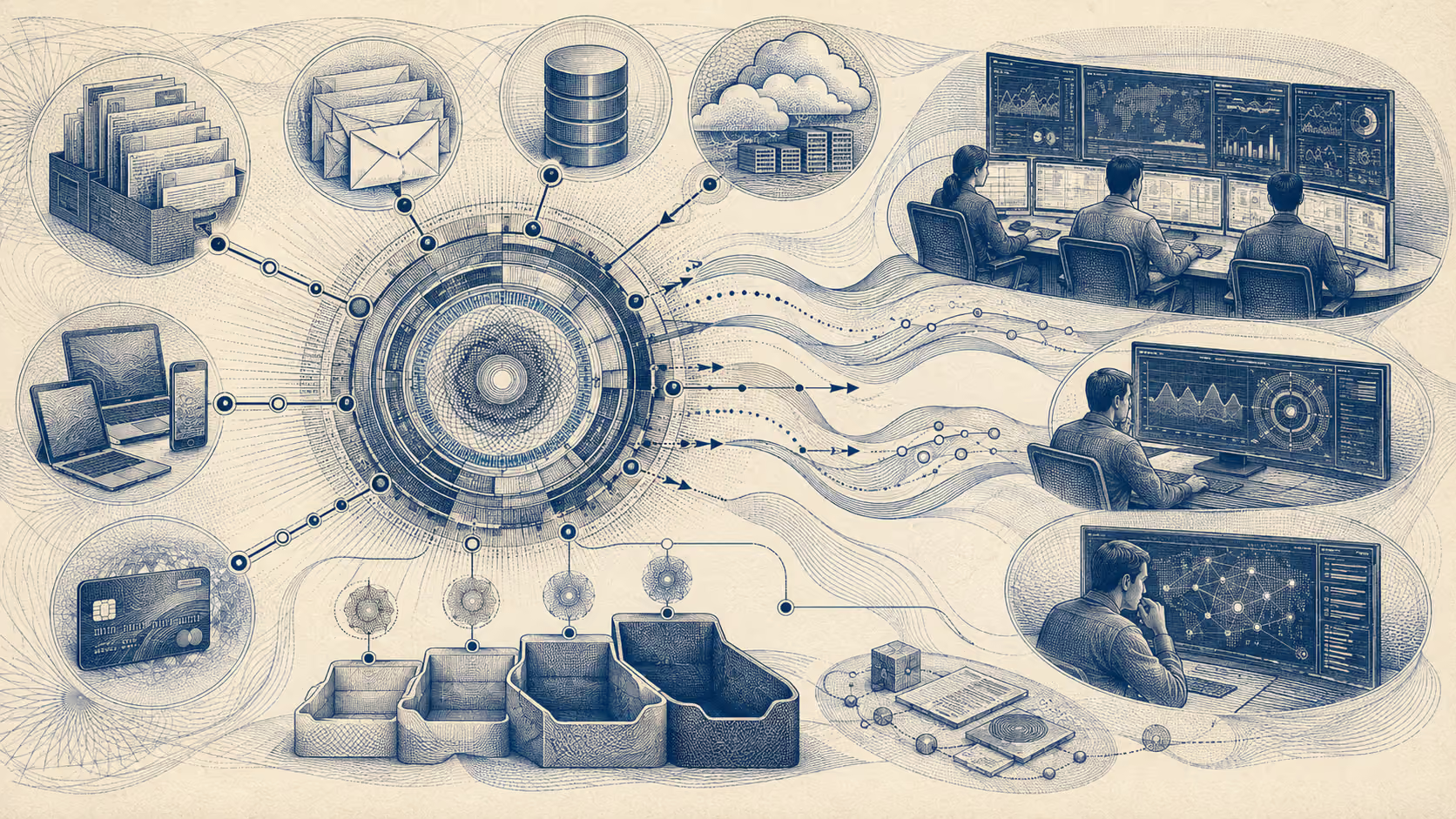
Integrating data classification with SOC programs does not necessarily mean building entirely new tools from scratch or ripping out your existing architecture. It means fundamentally enabling your SOC workflows, SIEM, and SOAR platforms to understand data sensitivity automatically.
In practical execution, integration enables:
- Enriched Threat Alerts: Alerts are automatically tagged with data classification metadata (e.g., "Alert: Suspicious login attempt on [Public Data] server" vs. "Alert: Suspicious login attempt on [Restricted Financial Data] server").
- Contextual Detection Rules: Detection logic is rewritten to prioritize and instantly escalate activity involving highly sensitive data.
- Data-Driven Playbooks: Automated incident response playbooks trigger different containment actions based on the specific data exposure risk.
- Focused Monitoring: Continuous monitoring is heavily weighted toward high-value data flows and sensitive data repositories.
Instead of asking, "Is this activity suspicious?", teams ask, "Is this suspicious activity currently affecting sensitive data?" That minor shift completely changes how incidents are prioritized and handled.
Where Integration Delivers Immediate Value
When data classification becomes an active, breathing part of SOC operations, the benefits are visible almost immediately. Detection and response shift away from handling generic, low-level alerts to focusing intensely on incidents that carry true business and regulatory risk.
1. Alert Prioritization Based on Data Sensitivity
SOC teams often struggle to decide which of the 10,000 daily alerts needs urgent, human attention. When alerts automatically include data classification context, prioritization becomes instantly clearer. Suspicious activity involving a server housing public marketing data may be logged as low risk, but the exact same activity targeting a database filled with tokenized payment data or customer PII triggers a "Code Red" immediate response. This drastically helps teams reduce noise and focus their finite resources on incidents that carry real business impact.
2. Precise Insider Threat Detection
Unusual user behavior is not always inherently malicious, but unauthorized access to highly sensitive data outside a user's normal role is a glaring risk signal. Data classification helps SOC teams quickly identify when abnormal internal activity involves regulated or strictly confidential information. This dramatically reduces false positives while vastly improving the detection of malicious insider threats or compromised employee credentials.
3. Faster and More Informed Incident Response
During an active incident, response teams need to quickly understand the "blast radius" to know exactly what data is affected. With classification seamlessly integrated into detection workflows, incident responders immediately see whether sensitive or regulated data is involved. This enables them to make faster, more aggressive containment decisions (such as instantly isolating a server) and dictates exactly how quickly legal and executive teams must be escalated.
4. Stronger Data Exfiltration Detection
Modern attackers increasingly target data theft rather than simply causing system destruction (like early ransomware). Integrating data classification tools allows SOC teams to specifically detect when highly sensitive information is being moved, compressed, or exfiltrated out of the network. This helps them stop high-impact data theft earlier in the attack kill-chain, instead of responding days later after the exposure has already occurred.
Conclusion: From Detection to Data-Driven Defense
Data classification and SOC operations can no longer afford to function independently. One identifies what matters most to the business, while the other actively protects it in real time.
As organizations’ adoption of complex multi-cloud platforms and sprawling AI systems continues to expand, protecting the data itself becomes central to all security operations. Integrating data classification with modern SOC programs—such as an Agentic SOC—allows teams to detect threats earlier, respond with critical business context, protect crown-jewel data assets, and seamlessly align daily security operations with executive governance objectives.
Following a phased approach that includes ensuring classification coverage is highly accurate, making classification metadata visible to security tools, updating SOC detection logic, and establishing continuous collaboration between governance and SOC teams is the key to success.
For data governance and SOC teams, the opportunity is clear. Deep collaboration and technological integration are now absolutely essential to building resilient, modern security programs that actually stop data breaches.
Frequently Asked Questions (FAQs)
Q1. What is the difference between data discovery and data classification?Data discovery is the automated process of scanning your network, endpoints, and cloud storage to locate exactly where data resides. Data classification is the subsequent process of analyzing that discovered data and tagging it with a specific label (e.g., Public, Internal, Confidential, Restricted) based on its sensitivity and regulatory requirements.
Q2. How does integrating data classification reduce alert fatigue in a SOC?Without classification context, a SOC treats a suspicious login on a test server with the same urgency as a suspicious login on a customer database. By integrating classification metadata directly into the SIEM, analysts can automatically filter out or deprioritize alerts involving non-sensitive data, drastically reducing the volume of alerts requiring manual human review.
Q3. Can an external Managed Detection and Response (MDR) provider utilize our internal data classification labels?Yes. Elite MDR providers can integrate via APIs with your existing data classification and Data Loss Prevention (DLP) tools. This allows their remote threat hunters and automated SOAR platforms to ingest your specific classification tags, ensuring their response actions align perfectly with your internal data governance policies.
Q4. Why is data classification critical for ransomware defense?Modern ransomware operators practice "double extortion"—they encrypt your systems, but they also steal your sensitive data and threaten to leak it publicly. If your SOC does not know where your most classified data lives, they cannot prioritize defending it during an active ransomware attack. Integrated classification ensures the SOC immediately locks down the most valuable data first.