
TABLE OF CONTENT
For two decades, security operations have heavily invested in generating more alerts and better detection signals. However, this relentless focus on detection has inadvertently created a dangerous Signal-to-Response Gap. When a perfect threat signal waits in a human queue while an automated attack executes, the organization remains entirely exposed. Previous attempts to solve this bottleneck with Security Orchestration, Automation and Response (SOAR) ultimately underdelivered because static playbooks cannot reason, and the compounding maintenance burden quickly overwhelmed engineering teams.
To effectively neutralize threats at machine speed, the industry is shifting toward the Agentic SOC—an operational model where AI autonomously drives investigations, forms hypotheses, and proposes containment. Unlike traditional automation, a true agentic system evaluates deep environmental context and escalates only when encountering genuine ambiguity. However, as the market floods with new AI claims, security leaders face the daunting challenge of separating true autonomous reasoning from basic LLM-assisted search tools.
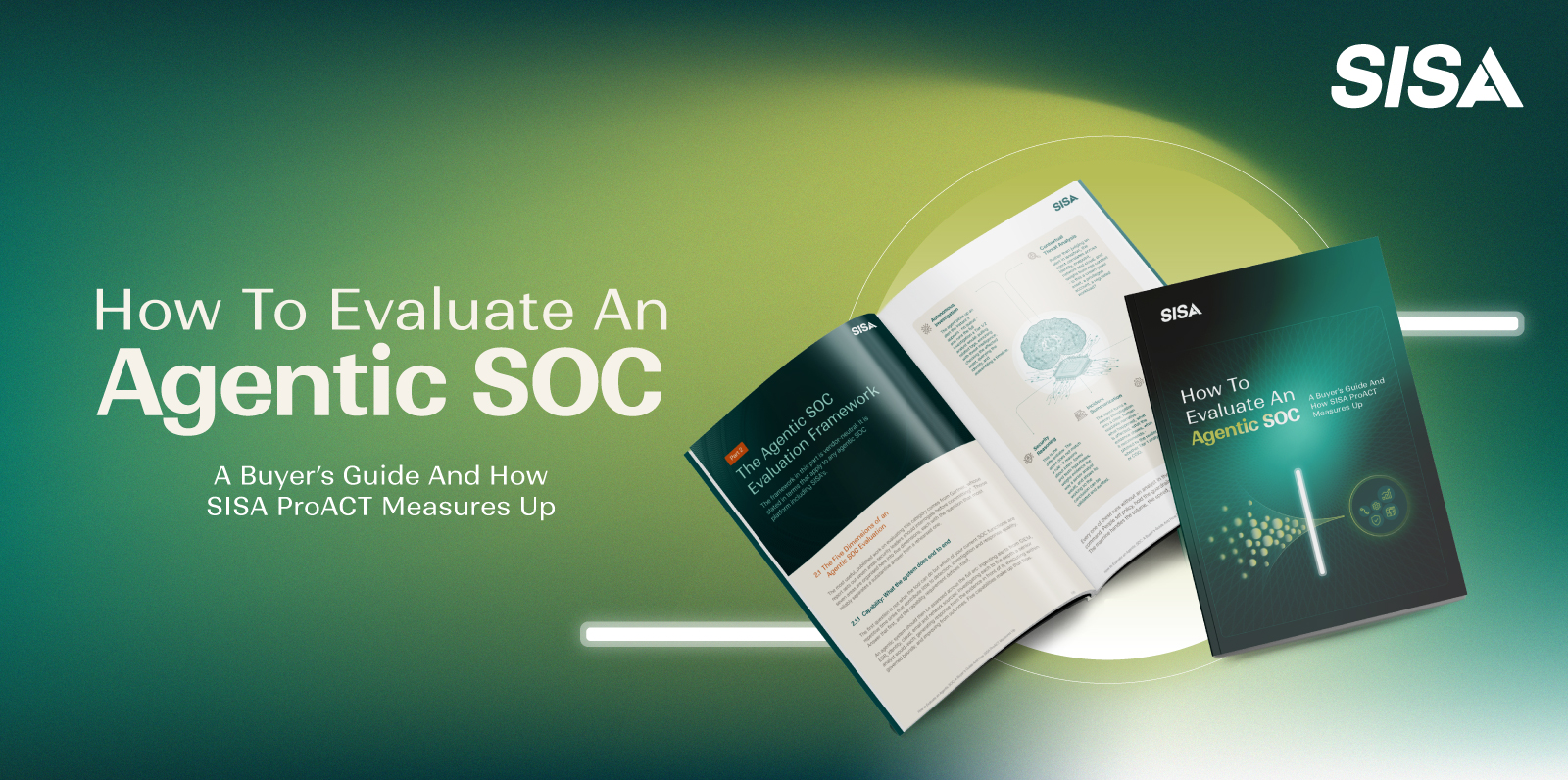
To help organizations navigate this complex landscape, this comprehensive buyer's guide provides a structured, vendor-neutral evaluation framework. It details the critical questions buyers must ask regarding integration fit, decision autonomy, pricing economics, and forensic assurance and assesses SISA ProACT against the Agentic SOC framework using the same evidence classes. By outlining the exact test scenarios and a proven 90-day value realization plan, this eGuide empowers security teams to confidently validate platforms before deployment.
{{cta-component}}