
cyberpedia
April 17, 2025
2
MIN READ
Personally Identifiable Information (PII) Data Examples: Everything to Know
Discover what Personally Identifiable Information (PII) is, real-world examples, risks of exposure, and best practices to protect sensitive data. Learn about GDPR, CCPA, and more.
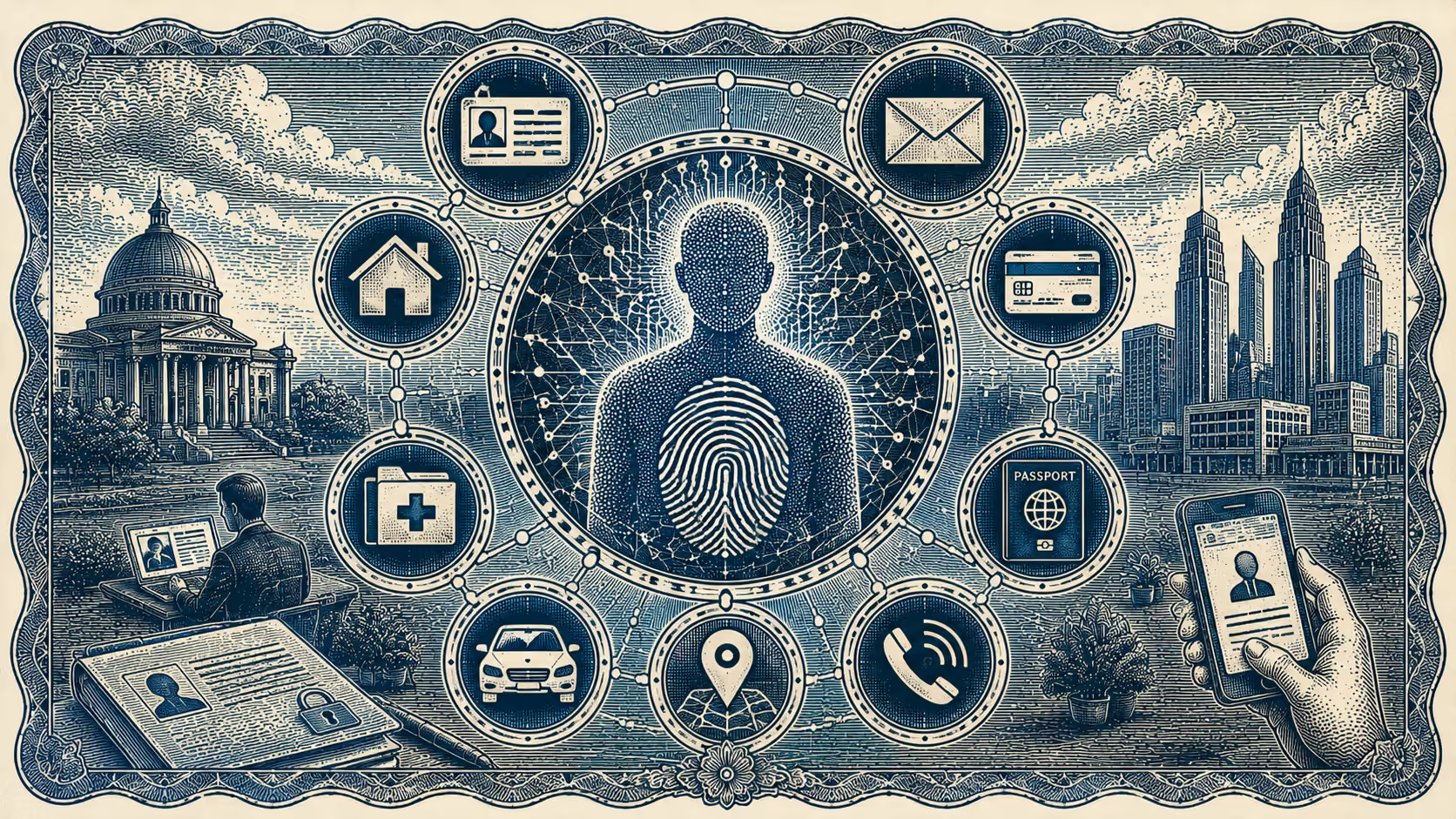
TABLE OF CONTENT
What Is Personally Identifiable Information (PII)?
Personally Identifiable Information (PII) refers to any data that can identify an individual, either on its own or when combined with other information. This includes direct identifiers like Social Security numbers (SSNs) and indirect identifiers like ZIP codes or birthdates, which become PII when linked to other data. Understanding PII is critical for compliance with privacy laws, safeguarding against identity theft, preventing financial fraud, and mitigating severe compliance risk that could lead to lasting reputational damage.
PII Data Examples: Sensitive vs. Non-Sensitive
PII generally falls into two distinct categories based on the risk it poses to the individual if compromised:
1. Sensitive PII
This data can cause significant, direct harm if exposed. Examples include:
- Social Security numbers (SSNs)
- Passport or driver’s license numbers
- Financial account or credit card details
- Medical records or health insurance information
- Biometric data (fingerprints, facial recognition)
- Login credentials (usernames, passwords)
2. Non-Sensitive PII
While not inherently risky in isolation, this data can easily identify individuals when combined with other available details:
- Full name (if unique)
- Email or physical address
- Phone number
- Date of birth
- Race, gender, or religion
- Geolocation (city, ZIP code)
- Social media handles or IP addresses
Example: A public LinkedIn profile showing your name and employer isn’t sensitive alone. However, paired with your birthdate and physical address, it could easily enable targeted identity theft.
Why Is Protecting PII Critical?
1. Prevent Identity Theft
Cybercriminals use stolen PII to open fraudulent accounts, file fake tax claims, or drain bank accounts directly.
2. Legal Compliance
Laws like the EU’s GDPR and California’s CCPA impose strict rules for handling PII. Integrating a rigorous managed compliance program is essential, as non-compliance can lead to fines up to 4% of global revenue (GDPR) or $7,500 per violation (CCPA). Furthermore, if your PII includes cardholder data, understanding your exact PCI DSS compliance levels is mandatory for avoiding processing restrictions.
3. Maintain Trust
Data breaches erode customer trust overnight. For example, the devastating 2017 Equifax breach exposed 147 million SSNs, ultimately costing the company over $1.4 billion in settlements and remediation.
4. Avoid Financial Losses
The average cost of a data breach in 2023 was $4.45 million, with the healthcare and financial sectors repeatedly hit the hardest due to the high value of their PII.
How Is PII Stolen?
Cybercriminals continually evolve their tactics to harvest sensitive information:
- Phishing: Fake, highly targeted emails trick users into willingly revealing passwords, SSNs, or bank details.
- Malware: Spyware silently logs keystrokes to steal credit card details. Combating this requires continuous Managed Detection and Response (MDR) to proactively identify network anomalies before extraction occurs.
- Data Breaches: Hacking directly into corporate databases containing unencrypted consumer data (e.g., the 2018 Facebook-Cambridge Analytica scandal).
- Physical Theft: Stealing physical mail, wallets, or unsecured digital devices containing unencrypted local data.
Global PII Regulations
- GDPR (EU): Defines PII broadly as any data linked to an identifiable person. It requires explicit consent for data collection and mandates strict breach notifications within 72 hours.
- CCPA (California): Grants state residents broad rights to access, delete, or opt out of the sale of their PII to third parties.
- HIPAA (U.S.): Protects health-related PII (known as PHI), requiring rigorous encryption and strict access controls for all medical records.
- PIPEDA (Canada): Governs private-sector data collection, heavily emphasizing corporate transparency and user consent.
Best Practices to Protect PII
- Minimize Data Collection: Only gather the essential PII necessary for your immediate business operations.
- Encrypt Data: Use AES-256 encryption for all data, whether it is stored at rest or actively transmitted in transit.
- Access Controls: Apply strict role-based permissions and mandatory multi-factor authentication (MFA) across your organization.
- Regular Audits: Monitor systems for vulnerabilities and unauthorized access using proactive, AI-driven Agentic SOC capabilities.
- Incident Response Plan: Outline precise steps for immediate breach containment, forensic analysis, and legal notification by partnering with elite digital forensics and incident response (DFIR) teams.
Pro Tip: Tools like data loss prevention (DLP) software and anonymization techniques (e.g., masking SSNs in lower environments) add invaluable layers of security.
Conclusion
From SSNs to geolocation data, PII is a lucrative goldmine for cybercriminals and a massive legal liability for organizations. By establishing strict data classification levels, adopting high-grade encryption, and staying compliant with rapidly evolving global regulations, businesses can successfully mitigate risks and build lasting consumer trust.
Solutions like SISA Radar, a highly accurate data discovery and classification tool, help organizations rapidly identify and safeguard sensitive data across fragmented systems—proactively reducing exposure and ensuring audit readiness. Prioritize PII protection today; your customers’ privacy and your brand's reputation depend entirely on it.
Frequently Asked Questions (FAQs)
1. Is an IP address considered PII?Under GDPR, yes—IP addresses are legally considered PII because they can track and identify users when combined with other behavioral data.
2. What’s the difference between PII and PHI?Protected Health Information (PHI) is a highly specific subset of PII that deals exclusively with medical records, treatments, and payments, strictly governed by HIPAA.
3. Can businesses sell non-sensitive PII?Under laws like the CCPA, consumers have the legal right to opt out of the sale of their PII, even if the data itself is considered non-sensitive.
4. How long should companies retain PII?You should retain it only as long as strictly necessary. The GDPR legally mandates complete deletion once the data is no longer actively needed for its original collected purpose.
5. Does GDPR apply to non-EU companies?Yes. It applies to any company globally, provided they process EU residents’ data, monitor their behavior, or offer goods and services within the EU.